
Liver Problems – Symptoms and Causes
Are you constantly feeling tired, experiencing some unexplained bloating, or some sudden skin changes that you might shrug off as “stress” or “bad eating habits”? Many people miss these subtle hints and don’t realize that one of the most vital organs in your body may be silently struggling with liver troubles. The liver works 24/7 to detoxify the body, digest fats, regulate nutrients, and maintain overall health. However, when liver function is compromised, signs are sent that should not be ignored.
The real issue is that liver disorders typically have symptoms that develop slowly. Often, by the time people notice some serious pain, the area has already started to break down. Early recognition of liver issues can be the key to avoiding complications from these problems and to having a healthy future. Let’s look at some different liver ailments, the causes of these conditions, and the biggest symptoms that could be involved with liver injury.
What is Liver Problem?
Liver problems are any condition that involves abnormalities in the structure or function of the liver. These include fatty liver, hepatitis, liver inflammation, cirrhosis, liver failure, and other hepatic diseases. The liver is important because it removes toxins/waste products from the circulation, creates bile to aid digestion, stores nutrients, and has a role in metabolism. With liver damage or liver inflammation, the liver is not able to perform these important tasks.
Various diseases involving the liver have varying symptoms and severity. Some conditions are caused by unhealthy lifestyle choices, and others can be caused by infections, genetic disorders, or autoimmune disorders.
Earliest Signs of Liver Problems
Some of the biggest problems with liver disease are that patients can start with symptoms that are mild in the beginning. Liver issues may not be noticed until they cause more common health symptoms, such as lethargy or indigestion.
Early signs are:
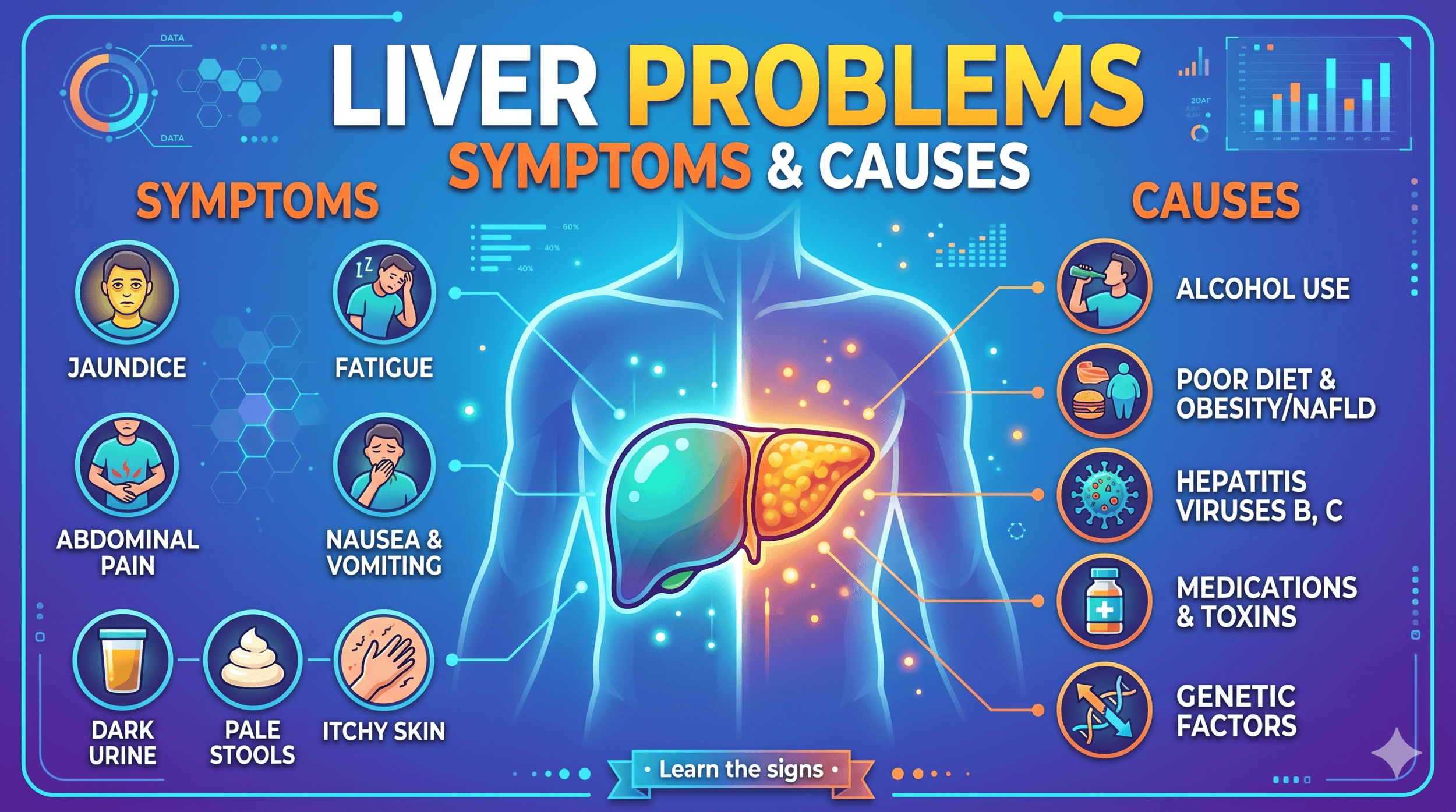
Constant tiredness and weakness
Loss of appetite
Mild abdominal discomfort
Nausea or stomach trouble
Unexplained weight loss
Bloating after meals
Dark urine
Pale stools
Some signs of problems with liver function may become more obvious with the passage of time. Prompt identification of liver disease is very crucial because if it is not treated during the early stages, it can lead to liver damage and lead to permanent liver disease.

Common Causes of Liver Problems
An awareness of the causes of liver problems can help minimise the risk of developing any serious complications. Liver damage can be caused by various health, lifestyle, and environmental factors.
1. Excessive Alcohol Consumption
Consuming lots of alcohol is one of the biggest contributors to liver disease globally. Alcohol harms liver cells and can result in swelling, fatty liver, alcoholic hepatitis, or cirrhosis.
2. Bad nutrition and obesity
NAFLD (Non-Alcoholic Fatty Liver Disease) is a risk factor associated with high consumption of processed foods, sugar, and unhealthy fats. Obesity and a sedentary lifestyle also play major roles in liver diseases.
3. Viral Infections
Severe hepatic disease can result from hepatitis viruses like Hepatitis A, Hepatitis B, and Hepatitis C. These infections enflame the liver cells and can cause persistent liver problems if not cured.
4. Medications and Toxins
Some drugs, chemical products, and food supplements are toxic to the liver if they are consumed in high doses or at the wrong time. Chronic use of painkillers and antibiotics can be detrimental to liver function.
5. Diabetes and High Cholesterol
Diabetes, insulin resistance, and high cholesterol are all risk factors for fatty liver disease because of excess fat in the liver.
6. Autoimmune and Genetic Disorders
Certain liver diseases are caused by the immune system attacking the liver or by inherited liver metabolism disorders.
Liver Failure Symptoms
Liver failure occurs when the liver becomes unable to function. This can occur abruptly or over time from the chronic liver disease.
Symptoms of liver failure are:
Severe fatigue
Yellowing of the skin and eyes (jaundice)
An increase in abdominal and leg girth.
Trouble paying attention or focusing
Prone to bruising or bleeding easily
Persistent vomiting
Severe abdominal pain
Dark-colored urine
Liver failure can be life-threatening in advanced cases, and treatment should proceed immediately. Early signs and symptoms of a liver problem can be detected and help avoid the progression of liver failure.
Females’ Symptoms of Fatty Liver
With hormonal shifts and rising obesity levels, sedentary lifestyles, and stress, fatty liver disease is a condition that has long been caused by an increase in women. Females may experience some symptoms different from men due to metabolic/glandular differences, sometimes called “fatty liver in females.”
Common symptoms include:
Constant fatigue
Hormonal imbalance
Difficulty losing weight
Abdominal heaviness
Pain in the upper right abdomen
Hair thinning or dull skin
Irregular digestion
Mood swings and low energy
For many women, fatty liver disease is only detected when a routine blood test or scan shows liver abnormalities. Regular exercise, a healthy weight, and a well-balanced diet can greatly lower the risk.
Inflamed Liver Symptoms
Liver inflammation (hepatitis) is swelling or irritation of liver tissue. Inflammation can occur due to infection, alcohol consumption, autoimmune diseases, or toxins.
Symptoms of a swollen liver that’s inflamed are:
Fever
Abdominal pain
Jaundice
Nausea and vomiting
Fatigue
Muscle and joint pain
Loss of appetite
Inflation or stomach enlargement
If liver inflammation is present over an extended period, liver tissue can scar, and fatty lesions may develop into cirrhosis.
Symptoms of liver disease
Liver disease can have many effects throughout the body due to the liver’s role in many systems within the body. The more the liver deteriorates, the greater the signs and symptoms become.
Among some significant features are:
Jaundice
Jaundice (a yellow discolouration of the skin and the eyes) is a result of poor liver function, which causes bilirubin levels to accumulate in the blood.
Itchy Skin
Toxin accumulation as a result of liver disease can result in itchy skin.
Swelling
In advanced liver disease, fluid buildup (oedema) occurs in the legs and abdomen.
Mental Confusion
Brain function may become impaired, leading to confusion, memory loss, and mood changes.
Digestive Problems
Nausea, bloating, constipation, or indigestion are common issues among people who have liver disorders.
There are ample signs and symptoms of liver disease that should never be dismissed, much less ignored, if two or more happen simultaneously.
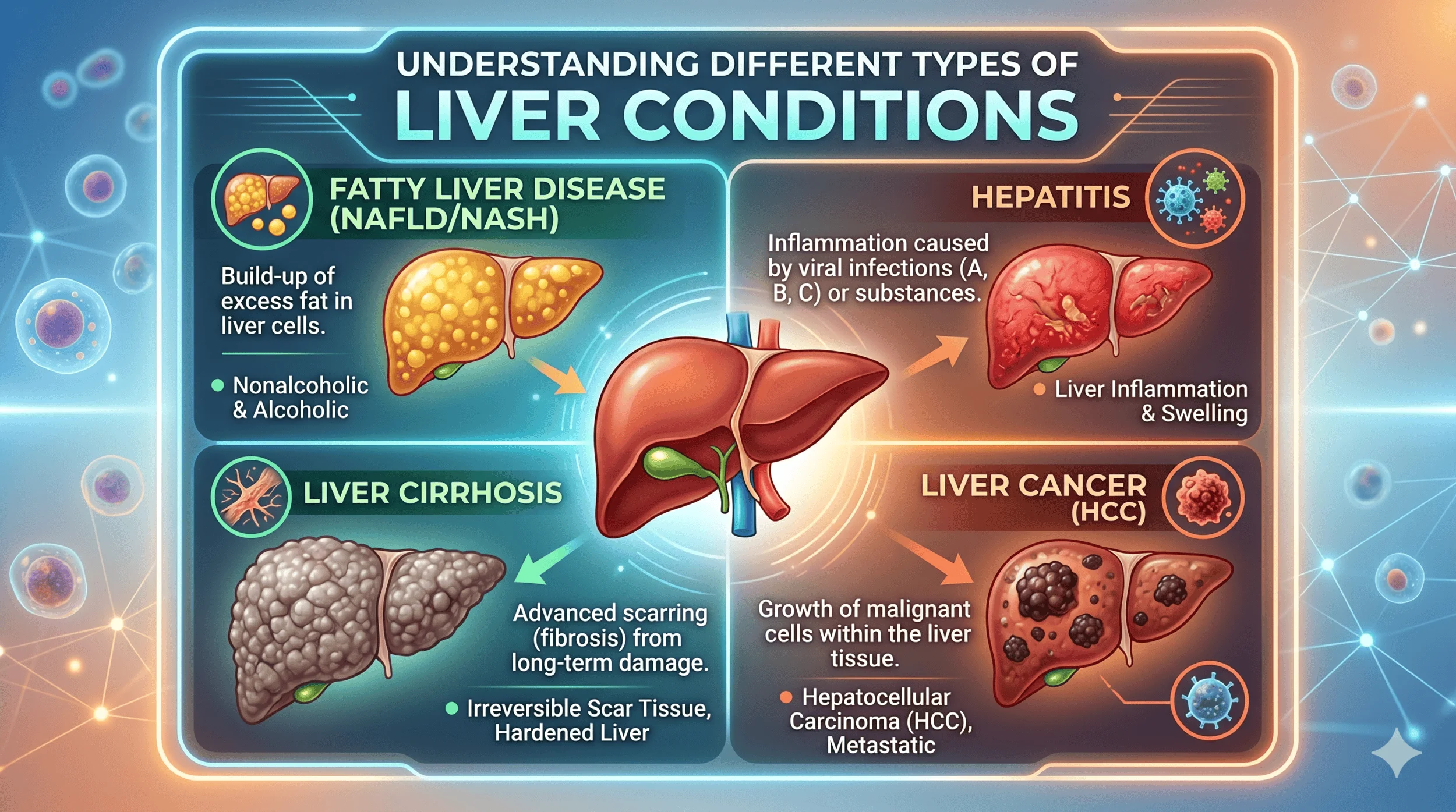
Different Types of Liver Conditions
There are some liver conditions that are variable in severity and their aetiology.
Fatty Liver Disease
The result of an overaccumulation of fat in the liver. It can be alcohol related or non-alcohol-related.
Hepatitis
Damage to the liver due to viral sickness, from drinking, or due to autoimmune diseases.
Cirrhosis
Damage to the liver’s hard tissue prevents the liver from functioning normally.
Liver Cancer
Chronic liver Disease is frequently a risk factor for cancer of liver cells.
Liver Failure
A serious disorder that affects the liver.
Awareness of these liver conditions and symptoms enables early diagnosis and treatment.
Females’ Symptoms of Fatty Liver
With hormonal shifts and rising obesity levels, sedentary lifestyles, and stress, fatty liver disease is a condition that has long been increasing in women. Females may experience some symptoms different from men due to metabolic/glandular differences, sometimes called “fatty liver in females.”
Common symptoms include:
Constant fatigue
Hormonal imbalance
Difficulty losing weight
Abdominal heaviness
Pain in the upper right abdomen
Hair thinning or dull skin
Irregular digestion
Mood swings and low energy
For many women, fatty liver disease is only detected when a routine blood test or scan shows liver abnormalities. Regular exercise, a healthy weight, and a well-balanced diet can greatly lower the risk.
Inflamed Liver Symptoms
Liver inflammation (hepatitis) is swelling or irritation of liver tissue. Inflammation can occur due to infection, alcohol consumption, autoimmune diseases, or toxins.
Symptoms of a swollen liver that’s inflamed are:
Fever
Abdominal pain
Jaundice
Nausea and vomiting
Fatigue
Muscle and joint pain
Loss of appetite
Inflation or stomach enlargement
If liver inflammation is present over an extended period, liver tissue can scar, and fatty lesions may develop into cirrhosis.
Symptoms of liver disease
Liver disease can have many effects throughout the body due to the liver’s role in many systems within the body. The more the liver deteriorates, the greater the signs and symptoms become.
Among some significant features are:
Jaundice
Jaundice (a yellow discolouration of the skin and the eyes) is a result of poor liver function, which causes bilirubin levels to accumulate in the blood.
Itchy Skin
Toxin accumulation as a result of liver disease can result in itchy skin.
Swelling
In advanced liver disease, fluid buildup (oedema) occurs in the legs and abdomen.
Mental Confusion
Brain function may become impaired, leading to confusion, memory loss, and mood changes.
Digestive Problems
Nausea, bloating, constipation, or indigestion are common issues among people who have liver disorders.
There are ample signs and symptoms of liver disease that should never be dismissed, much less ignored, if two or more happen simultaneously.
Different Types of Liver Conditions
There are some liver conditions that are variable in severity and their etiology.
Fatty Liver Disease
The result of an overaccumulation of fat in the liver. It can be alcohol related or non-alcohol-related.
Hepatitis
Damage to the liver due to viral sickness, from drinking, or due to autoimmune diseases.
Cirrhosis
Damage to the liver’s hard tissue prevents the liver from functioning normally.
Liver Cancer
Chronic liver Disease is frequently a risk factor for cancer of liver cells.
Liver Failure
A serious disorder that affects the liver.
Awareness of these liver conditions and symptoms enables early diagnosis and treatment.
How to Protect Liver Health
Steps can be taken to prevent liver disease. Here are a few essential compounds that aid liver wellness:
- Adopt a balanced diet with fruits & vegetables.
- Avoid over-processed foods and sugary beverages.
- Do not drink too much liquid, such as alcohol.
- Keep a healthy weight.
- Exercise regularly
- Stay hydrated
- Ever taken unnecessary medications/supplements
- Get the Hepatitis vaccine
- Get regular health checks.
Healthy activities that can be performed on a day-to-day basis can have a significant impact in preventing liver damage and the health and well-being that comes with it.
When to visit a doctor
If you continue to experience symptoms like tiredness, yellow skin, abdominal pain, swelling, or digestive pain, professional medical advice should be sought. Liver disease can be effectively managed if it is diagnosed early, as treatment can be started by taking blood tests, imaging scans, and liver function tests.
It is possible to have liver health problem symptoms and not pay attention to them, leading the problem to silently progress. Appropriate medical treatment is crucial to avoiding potentially irreversible liver damage.
Conclusion
The liver is one of the most heavily functioning organs in the body, and liver disease can present itself without notice. The earlier you can spot signs of liver issues and know the causes of liver disease, the more time you will get to maintain your health before serious issues occur.
Each communication from the body is worth taking seriously, whether it’s symptoms of fatty liver in a female or liver failure symptoms. From fatigue to a sore abdomen, to jaundice, to swollen liver symptoms, early intervention can make all the difference.
The best way to take care of liver health is to maintain a healthy lifestyle, eat nutritious foods, avoid harmful habits, and get medical help when necessary. The understanding of liver conditions, hepatic disease, and the signs and symptoms of liver problems will help people make the best decisions for their health and avoid future complications.


