
Diabetes Disease: A Complete Guide to Causes, Symptoms & Treatment
Introduction
Diabetes is one of the most common health conditions affecting millions of people worldwide. It changes the way your body uses glucose (blood sugar), which is the main source of energy for your cells.
Normally, the body produces a hormone called insulin that helps move glucose from the bloodstream into the cells, where it is used for energy. In people with diabetes, the body either doesn’t make enough insulin or cannot use it effectively. As a result, blood sugar levels remain higher than normal.
Although diabetes requires proper medical care, it can often be managed successfully with a healthy diet, regular exercise, lifestyle changes, regular health checkups, and monitoring of blood sugar levels.
What Is Diabetes?
Diabetes is a metabolic disorder in which blood glucose (blood sugar) levels remain higher than normal. Glucose is the body’s primary source of energy, and insulin—a hormone produced by the pancreas—helps move glucose from the bloodstream into the body’s cells.
When the body doesn’t produce enough insulin or becomes resistant to it, glucose stays in the bloodstream instead of entering the cells. Over time, this leads to high blood sugar levels, which is known as diabetes.
Types of Diabetes
1. Type 1 Diabetes
Type 1 diabetes is an autoimmune condition in which the body’s immune system mistakenly attacks the insulin-producing cells in the pancreas. Because of this, the body produces little or no insulin, and people with Type 1 diabetes need insulin therapy throughout their lives.
Common characteristics:
- Usually develops in childhood or young adulthood
- Requires daily insulin
- Cannot be prevented
Example: If a 12-year-old child’s body completely stops producing insulin and they need insulin injections every day to survive, this is known as Type 1 Diabetes.
2. Type 2 Diabetes
Type 2 diabetes is the most common form of diabetes. It develops when the body becomes resistant to insulin or doesn’t produce enough insulin to maintain normal blood sugar levels.
This type usually develops gradually and is often linked with lifestyle and genetic factors.
Risk factors include:
- Overweight or obesity
- Physical inactivity
- Family history
- Poor dietary habits
- Increasing age
- High blood pressure
3. Gestational Diabetes
Gestational diabetes develops during pregnancy and usually disappears after childbirth. However, women who experience gestational diabetes have a higher chance of developing Type 2 diabetes later in life, so regular health monitoring is important.
Common Symptoms of Diabetes
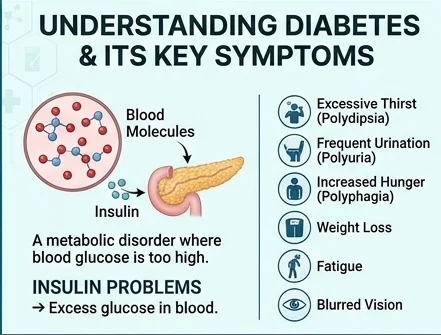
Recognizing the early signs of diabetes can help with timely diagnosis and treatment.
Common symptoms include:
- Frequent urination
- Excessive thirst
- Increased hunger
- Unexplained weight loss
- Fatigue
- Blurred vision
- Slow-healing wounds
- Frequent infections
- Tingling or numbness in hands and feet
- Dry skin
If you notice any of these symptoms, it’s important to consult a healthcare professional for proper testing rather than trying to diagnose yourself.
Causes of Diabetes
Several factors can contribute to the development of diabetes.
Genetics
If diabetes runs in your family, your chances of developing the condition may be higher.
Insulin Resistance
Sometimes the body’s cells stop responding properly to insulin, making it difficult for glucose to enter the cells.
Obesity
Excess body fat, especially around the abdomen, can increase insulin resistance and raise the risk of Type 2 diabetes.
Sedentary Lifestyle
A lack of regular physical activity can affect the body’s ability to use glucose efficiently.
Unhealthy Diet
Frequently consuming sugary beverages, refined carbohydrates, processed foods, and excess calories may increase the risk of developing Type 2 diabetes.
Possible Complications of Diabetes
If blood sugar levels remain uncontrolled for a long time, diabetes can affect several organs and increase the risk of serious health problems.
Possible complications include:
- Heart disease
- Stroke
- Kidney disease
- Eye damage
- Nerve damage
- Poor wound healing
- Foot problems
Regular monitoring, healthy lifestyle habits, and proper medical care can help reduce these risks.
How Is Diabetes Diagnosed?
Doctors diagnose diabetes through blood tests that measure blood sugar levels. Common tests include:
- Fasting Blood Sugar Test
- HbA1c Test
- Oral Glucose Tolerance Test (OGTT)
A healthcare professional will interpret the test results and confirm the diagnosis if diabetes is present.
Lifestyle Tips for Managing Diabetes

Healthy daily habits can make a significant difference in managing diabetes and improving overall well-being.
Eat a Balanced Diet
Choose foods like:
- Whole grains
- Green vegetables
- High-fiber foods
- Lean protein
- Healthy fats
- Fresh fruits in moderation
Try to limit:
- Sugary beverages
- Refined flour
- Excess sweets
- Ultra-processed foods
Small, consistent changes in your daily meals can go a long way in supporting healthy blood sugar management.
Exercise Regularly
Aim for at least 150 minutes of moderate physical activity each week.
Activities may include:
- Walking
- Cycling
- Swimming
- Yoga
- Strength training
Regular movement helps improve insulin sensitivity and supports overall health.
Maintain a Healthy Weight
Even modest weight loss may help improve insulin sensitivity in many people with Type 2 diabetes.
Maintaining a healthy weight through balanced eating and regular exercise can make diabetes management easier.
Get Regular Health Checkups
Routine health checkups help detect problems early and allow timely treatment.
Regularly monitor:
- Blood sugar
- Blood pressure
- Cholesterol
- Eye health
- Kidney function
- Foot health
Ayurvedic Perspective on Diabetes
In Ayurveda, diabetes is broadly associated with Madhumeha, a condition described in classical Ayurvedic texts.
Rather than focusing on a single aspect of health, Ayurveda emphasizes maintaining overall balance through:
- Healthy eating habits
- Regular exercise
- Daily routine (Dinacharya)
- Weight management
- Herbal support under professional guidance
Several Ayurvedic herbs have traditionally been used to support overall metabolic wellness and healthy glucose metabolism.
Can Diabetes Be Prevented?
While Type 1 diabetes cannot currently be prevented, the risk of developing Type 2 diabetes may be reduced by adopting healthy lifestyle habits such as:
- Maintaining a healthy weight
- Exercising regularly
- Eating a balanced diet
- Avoiding tobacco
- Limiting alcohol
- Getting enough sleep
- Managing stress
- Going for regular health screenings
These habits benefit not only blood sugar levels but also overall health.
Best Ayurvedic Herbs Traditionally Used for Blood Sugar Support

🌿 Neem – Traditionally used to support healthy glucose metabolism.
🥒 Karela (Bitter Gourd) – Traditionally valued for supporting healthy blood sugar levels.
🍇 Jamun (Indian Blackberry) – Traditionally used to help maintain healthy blood sugar.
🌱 Gurmar (Gymnema sylvestre) – Known in Ayurveda as the “sugar destroyer” and traditionally used to support glucose metabolism.
🍈 Amla (Indian Gooseberry) – Rich in vitamin C and antioxidants, traditionally used to support overall metabolic health.
🪨 Shudh Shilajit – Traditionally used to support energy, vitality, and overall metabolic wellness.
🌾 Methi (Fenugreek) – Traditionally used to support healthy blood sugar levels and digestion.
Shane Neem Karela Jamun Powder: Ayurvedic Support for Healthy Blood Sugar
Shane Neem Karela Jamun Powder is a carefully formulated Ayurvedic herbal blend made with ingredients that have been traditionally used to support healthy blood sugar management and overall metabolic wellness.
When combined with a balanced diet, regular exercise, and prescribed medical care, it can be a valuable addition to a healthy lifestyle.
Key Ingredients
🌿 Neem – Traditionally used to support healthy glucose metabolism.
🥒 Karela (Bitter Gourd) – Traditionally valued for helping maintain healthy blood sugar levels.
🍇 Jamun – Traditionally used to support healthy blood sugar balance.
🌱 Gurmar – Known in Ayurveda for supporting healthy glucose metabolism.
🍈 Amla – Rich in antioxidants and vitamin C, supporting overall metabolic health.
🪨 Shudh Shilajit – Traditionally used to support energy, vitality, and overall wellness.
Why Choose Shane Neem Karela Jamun Powder?

- 100% Herbal Blend
- No Added Chemicals
- Easy to include in your daily routine
- Made with traditionally used Ayurvedic herbs
- Suitable as part of a balanced wellness routine
- Specially Formulated for People with Diabetes
Frequently Asked Questions (FAQs)
Can diabetes be cured permanently?
Diabetes is a long-term health condition that currently has no permanent cure. However, many people successfully manage their blood sugar levels through proper medical care, a balanced diet, regular exercise, stress management, and healthy lifestyle habits.
Can Shane Neem Karela Jamun Powder help with diabetes management?
Yes, Shane Neem Karela Jamun Powder may help support healthy blood sugar management as part of a balanced diet and healthy lifestyle. It is not a replacement for prescribed diabetes treatment.
Which foods should people with diabetes avoid or limit?
People with diabetes should limit sugary foods, sweet drinks, refined carbohydrates, and processed foods. Instead, choose fiber-rich foods, vegetables, whole grains, lean protein, and balanced meals to support better overall health.
Conclusion
Living with diabetes requires consistency rather than perfection. Early diagnosis, regular monitoring, healthy eating, physical activity, and proper medical care all play an important role in maintaining overall health and reducing the risk of complications.
For those interested in traditional Ayurvedic support, Shane Neem Karela Jamun Powder offers a blend of herbs that have been traditionally used to support metabolic wellness. When used responsibly alongside a healthy lifestyle and under professional guidance, it can complement an overall wellness routine. However, it should never replace prescribed diabetes treatment or professional medical advice.

